Washington wants to expand weapons production after reportedly depleting key stockpiles in the Iran war and Ukraine
US automakers could begin producing missiles and other weapons as Washington moves to expand military output and replenish its arsenals, President Donald Trump has said.
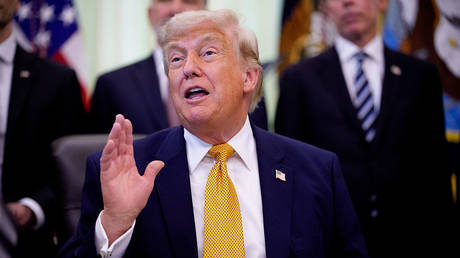
Speaking to reporters at the White House on Monday, Trump said car companies with spare factory capacity are discussing deals to manufacture weapons, including Patriot air-defense missiles and Tomahawk cruise missiles.
”They’re dealing with General Motors. They’re dealing with Ford,” Trump said. “I know General Motors is all excited about building weapons now.”
He added that some plants belonging to the two carmakers are expected to be converted to military production, describing the shift as part of a “big strong economic push” to produce arms.
His remarks come after the Wall Street Journal reported in April that the Pentagon had approached General Motors, Ford, GE Aerospace, and Oshkosh about retooling civilian factories to produce munitions and other military equipment.
The talks were reportedly part of an effort to put US industry on what Defense Secretary Pete Hegseth has called a “wartime footing,” echoing the World War II-era conversion of Detroit factories to military production.
The push comes amid mounting concern over the state of US weapons stockpiles after years of arms deliveries to Ukraine under former President Joe Biden and heavy missile use during the recent US-Israeli war against Iran.
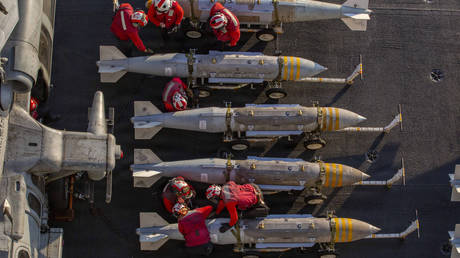
US media and think-tanks have warned that Washington burned through large quantities of critical munitions during the Iran campaign, including Tomahawk cruise missiles, Patriot interceptors, THAAD missiles, and other advanced systems.
Reuters has also reported that depleted inventories could delay US arms deliveries to fellow NATO members.
Trump has downplayed shortage concerns, saying the US has “quite a few” missiles but wants to keep larger reserves. His administration has requested a record military budget of around $1.5 trillion for the 2027 fiscal year, with much of the increase expected to go towards replenishing stockpiles and expanding production.