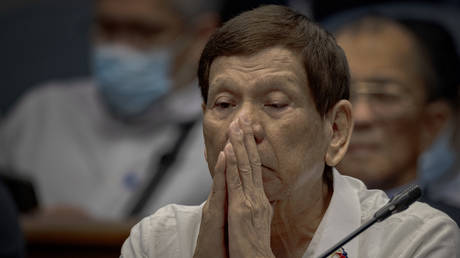
Ex-Philippines President Rodrigo Duterte will remain in custody in The Hague after judges ruled the court may prosecute him for his war on drugs
The International Criminal Court (ICC) has refused to release former Philippines president Rodrigo Duterte, ruling that it has jurisdiction over his case despite his country’s withdrawal from the tribunal. The 81‑year‑old will remain in custody in The Hague.
Duterte was arrested at Manila airport in March 2025 and transferred to the ICC’s detention facility in the Netherlands. He faces charges of crimes against humanity over a deadly anti‑drug campaign he launched while in office. Police records count roughly 7,000 deaths, although human rights groups put the figure much higher.
Duterte has consistently defended the campaign, saying he only ordered police to kill in self‑defense. His lawyers have also argued that the ICC lost jurisdiction when the Philippines formally withdrew from the Rome Statute in 2018.
The appeals chamber has rejected the argument, ruling that the alleged crimes were committed while the country was still a member and that a preliminary examination had already begun before the withdrawal took effect. The decision clears the way for a possible full trial.
The ruling has drawn sharp reactions from Duterte’s allies. Harry Roque, a former spokesman for the Philippines president, told RT that the court is using Duterte to justify its own existence.
“Outside of the Duterte case, the court has not been trying any other case,” he said, pointing to the ICC’s failure to prosecute any other leaders it has accused, namely Israeli Prime Minister Benjamin Netanyahu and Russian President Vladimir Putin. He called the decision “sad” and argued that the drug war was a “legitimate sovereign duty,” not a crime against humanity.
Professor Malou Tiquia, a political analyst, also expressed disappointment. “Who are foreigners to judge our president?” she asked, adding that Duterte left office with the highest approval rating in Philippine history. She questioned why the ICC targets leaders from developing countries while ignoring Western military actions that kill civilians.
Constitutional law professor James Reserva told RT that the case is a signal to future Philippine presidents. “If you will not behave like what we want you to behave, you will become like Duterte,” he said, claiming that the ICC is being driven by geopolitical interests rather than justice.
The ICC pre‑trial chamber is expected to decide by the end of April whether to confirm the charges. If confirmed, Duterte would become the first former Asian head of state to stand trial at The Hague.