The chancellor angered the White House by criticizing the Iran war
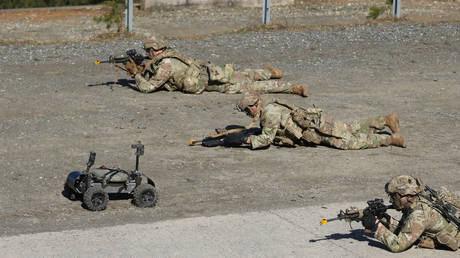
US President Donald Trump has said he could withdraw some American troops stationed in Germany amid a public spat with German Chancellor Friedrich Merz over the war in Iran.
“The United States is studying and reviewing the possible reduction of troops in Germany, with a determination to be made in the near term,” Trump wrote on Truth Social on Wednesday.
In 2020, near the end of his first term in office, Trump planned to withdraw around 12,000 of the roughly 36,000 service members stationed in Germany at the time. Former President Joe Biden later deployed additional troops to Germany, citing the Ukraine conflict.
More than 36,000 active-duty troops and 1,500 reservists are currently stationed at bases across Germany, according to CBS.
Trump has chided European allies for refusing to back the US-Israeli war with Iran and declining to help reopen the Strait of Hormuz, which Tehran closed to “hostile” shipping in February. The conflict has also prompted the president to revive his longstanding criticism of NATO, which he described this month as “a paper tiger.”
Speaking to students at a German school on Monday, Merz argued that the US was being “humiliated” by Iran and that the Trump administration lacked a clear strategy in the conflict. He also stressed that Germany was being hit hard by energy price increases caused by the war.
Trump responded by berating Merz on social media. “He doesn’t know what he’s talking about!” Trump wrote on Truth Social, adding: “No wonder Germany is doing so poorly, both economically and otherwise!”
Merz sought to downplay the feud on Wednesday, saying his personal relationship with the US president “remains good.”
“I simply had doubts from the start about what was begun with the war in Iran. That is why I have made that clear,” Merz said, as cited by Reuters.
Meanwhile, oil prices rose above $120 on Wednesday, the highest level since 2022, with uncertainty continuing over the prospects for US-Iranian negotiations.