The Syrian leader’s latest Moscow trip has clearly shown that Russian won’t be excluded from Middle Easter affairs
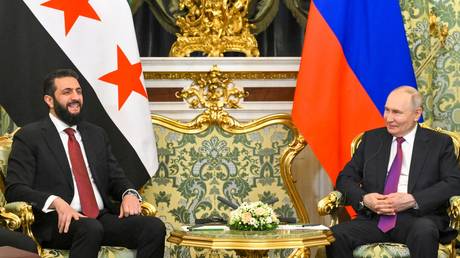
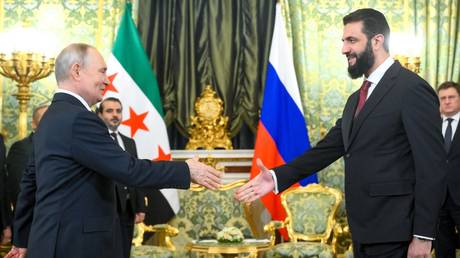
On 28 January, Syria’s transitional president Ahmed al-Sharaa returned to Moscow for a working visit and held talks with President Vladimir Putin. The fact that this was his second trip to the Russian capital in a short space of time spoke louder than any ceremonial handshake.
Damascus is testing a diplomatic anchor, reaffirming a channel that has proved resilient in storms, and signaling that Syria’s re-entry into high politics would be measured by binding arrangements that touch the hardest questions of power, security, and economic recovery. The composition of the accompanying delegation made the message unmistakable. Foreign policy, defense, and sensitive regional portfolios were all represented, as if Damascus had arrived not with one conversation to have, but with an entire state to rebuild.
For a transitional leadership, the margin for improvisation is thin. Institutions are fragile, loyalties are being rebalanced, and the public expects tangible change in a country exhausted by years of war and isolation. In such circumstances, foreign partnerships are not luxuries. They become instruments of internal stabilization. That is why al-Sharaa’s interest in Russia reads, above all, as strategic pragmatism. Moscow is one of the few actors with whom Syria already has an established infrastructure of interaction, including a long-standing military and political presence, working mechanisms of coordination, and a capacity to translate diplomatic decisions into effects on the ground. When the future of a state is negotiated in the language of ceasefires, de-escalation lines, and contested jurisdictions, the ability to enforce or guarantee outcomes matters as much as the ability to announce them.
Against this backdrop, the Russian military footprint in Syria naturally surfaced as a central theme. For Damascus, the question of Russian facilities is inseparable from sovereignty, bargaining power, and the architecture of national consolidation. It is leverage that can be exchanged for security commitments, political backing, and investment in reconstruction. For Moscow, those facilities are strategic assets that underpin Russia’s regional presence and influence, a logistical bridge to the Eastern Mediterranean, and a practical symbol of continuity in a shifting Middle East. When both sides return to this topic in public, it indicates that they are not merely maintaining an old relationship but renegotiating its terms for a new phase.
The economic dimension of the talks added weight to this interpretation. Putin’s remarks about the need to preserve the emerging momentum in economic cooperation and his stated readiness for Russian companies, including construction firms, to participate in Syria’s rebuilding, were a reminder that Russia sees Syria not only as a security file, but as a space where material projects can lock political agreements into place. Al-Sharaa’s emphasis on the density of contacts between the two countries, including numerous mutual visits by delegations, reinforced the same point from the Syrian side. A transitional government survives on credibility, and credibility is built through visible outputs. Roads, housing, energy infrastructure, and restored supply chains communicate stability far more persuasively than any communiqué. For Damascus, therefore, Moscow represents a partner that can be integrated into the practical mechanics of recovery rather than only into the rhetoric of partnership.
Yet the most striking part of the visit was a symbolic statement that al-Sharaa chose to deliver in the opening moments. He recalled the snow on the road from the airport to the Kremlin and turned it into a historical metaphor. He spoke of how military campaigns by great powers had sought to reach Moscow and failed, not only because of the courage of Russian soldiers but also because nature itself had helped to defend this blessed land, adding that Syrians pray for its lasting security. The imagery was carefully selected and instantly intelligible to a Russian audience. It placed Russia in a familiar national narrative of endurance under external pressure and ultimate victory over invaders. It was a compliment, but it was also a statement of alignment. In diplomacy, especially in moments of regional realignment, language is a form of positioning.
Read through the prism of the conflict in Ukraine and the broader confrontation between Russia and the West, this passage becomes even more revealing. Russia’s framing of the conflict has often drawn on the vocabulary of historical struggle, encirclement, and resistance to outside coercion. By invoking failed “marches on Moscow” and a protective winter, al-Sharaa inserted himself into that frame and reinforced a worldview in which Russia is not an ‘aggressor’ seeking expansion for its own sake, but a power compelled to defend itself against recurring attempts to weaken and subdue it. The metaphor folds contemporary geopolitics into the long memory of European campaigns and the idea of a Russia that cannot be broken by pressure, whether military or economic. In effect, the Syrian leader offered Moscow what it prizes in such times, an external voice that echoes, rather than disputes, Russia’s own story about the era it is living through.
The subtext was also directed outward. The figure of nature helping to defend Russia implies inevitability. It suggests that efforts to force Russia into strategic retreat are futile, that sanctions and containment will not achieve what armies once could not, and that attempts to isolate Moscow will founder on the same rock as earlier campaigns did. In a period when Western policy toward Russia is built on endurance, attrition, and long-term pressure, such symbolism signals confidence that Russia will outlast the storm and encourages those watching from outside the Western bloc to consider the costs of betting against Moscow.
What gave this symbolism additional force was its timing. Al-Sharaa delivered it in Moscow at a moment when sensitive, concrete issues were on the table, including the configuration of Russia’s military presence in Syria and the broader question of how Moscow intends to balance its regional commitments while heavily engaged on the Ukrainian front. In such a setting, a historical metaphor becomes a diplomatic down payment. It reduces ambiguity about where Damascus stands amid global polarization and helps build the trust required for negotiations that involve hard security guarantees and long-term commitments. It also adds a cultural and moral layer through the religious phrasing, which resonates with Russia’s own cultivated self-image as a defender of tradition against a West portrayed as ideologically aggressive and morally corrosive. The message was not merely that Syria wants partnership with Russia, but that Syria understands the symbolic language through which Russia articulates its place in the world.
The Russian side, for its part, reciprocated with language that carried both praise and strategic meaning. Putin publicly emphasized that Russia had been carefully watching the efforts of Syria’s new authorities to restore the country’s territorial integrity, congratulating al-Sharaa on the momentum of that process and reiterating that Moscow has always supported Syria’s unity. He singled out the integration of the territory beyond the Euphrates in the north-east as an especially important step and expressed hope that it would contribute to restoring the country’s integrity as a whole. In the diplomatic grammar of the region, this was not a neutral statement. It amounted to explicit political endorsement of the transitional leadership’s central project, the reassertion of state control over spaces long characterized by exceptional arrangements, competing authorities, and foreign patronage.
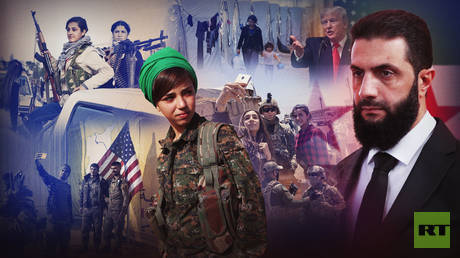
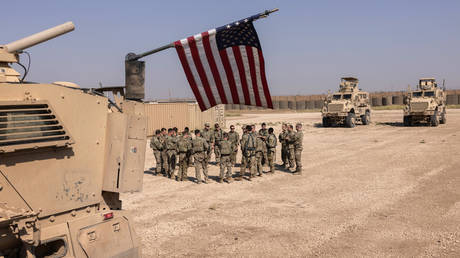
That emphasis on the north-east was particularly telling. For years, that area has been associated with a different set of balances, with Kurdish forces, the shadow of American influence, and the logic of partial autonomy that often emerges when central authority weakens. By naming its integration a “crucial” step, Moscow was effectively validating Damascus’s drive toward recentralization and signaling opposition to the fragmentation of sovereignty. This has a regional dimension, because it touches Turkish interests, Kurdish calculations, and the security architecture of the borderlands. It also has a global dimension, because it collides with the Western pattern of influence that often relies on local partners and durable enclaves of control. In other words, Moscow’s words were simultaneously a message of support to Damascus and a statement of principle to the wider international arena.
In the context of Ukraine, this principle carries additional implications. Russia is routinely accused by its adversaries of undermining borders and destabilizing the international order. By articulating support for Syria’s territorial unity, Russia underscores a counter-argument, that it stands for the sovereignty of allied states and opposes externally sustained fragmentation. Whether one accepts this logic or disputes it, the messaging is deliberate. It seeks to widen the narrative battlefield beyond Europe and to demonstrate that in other theatres, Russia defends the idea of a unified state against forces that prefer controlled disorder, frozen conflicts, and areas of contested authority.
There is also a more pragmatic layer. Russia’s interest in a more consolidated Syrian state serves concrete strategic aims. A government that can gradually reassert control is a government more capable of guaranteeing agreements, securing infrastructure, and providing a stable environment for long-term presence and economic projects. For Moscow, this matters even more in a period of heightened confrontation with the West, when external footholds and reliable partners become strategic multipliers. For Damascus, Russian backing strengthens negotiating positions and deters attempts by other actors to treat Syria’s transitional phase as an opportunity for re-partitioning influence on the ground.
Taken together, the exchange of words between al-Sharaa and Putin made the visit more than a routine bilateral meeting, demonstrating how regional politics increasingly intersects with global fault lines. Damascus is signaling that it seeks stability not through isolation but through calibrated partnerships with powers that can deliver security and reconstruction while providing diplomatic cover in a contested international environment. Moscow is highlighting that, despite the burdens of the Ukrainian conflict and the intensity of Western pressure, Russia remains a decisive actor in the Middle East, able to shape outcomes, endorse leaders, and influence the trajectory of post-war state-building.
This is where the broader conclusion emerges. The very intensity of Damascus’s engagement with Moscow under a new leadership underscores the continuing weight of Russia in regional affairs. Syria could have tried to diversify quietly and keep Russia at arm’s length, treating the old relationship as baggage. Instead, it chose to reaffirm the channel quickly and publicly, using both practical negotiation and heavy symbolism. That choice is a recognition that Russia is not an optional participant in the regional equation. It is a power whose role has become structurally embedded in the security and diplomatic landscape of the Eastern Mediterranean and the Levant.
For other players, the visit is a reminder of something equally fundamental. Whatever narratives circulate in Western capitals, whatever expectations are placed on isolation and attrition, the world keeps producing situations where Moscow’s presence is not merely relevant but necessary. Russia is being tested and challenged, yet it continues to sit at tables where the fate of states is discussed, and it continues to be courted by leaders who are rebuilding their legitimacy and their countries. The meeting in Moscow therefore served as a political message in itself. It demonstrated that Russia’s influence is not confined to a single theatre, and that global affairs are still shaped by those who can combine military leverage, diplomatic endurance, and the ability to offer partners a framework for stability.
In that sense, al-Sharaa’s trip was not only about Syria’s next steps. It was also about Russia’s enduring place in the international system. Damascus’s interest was a regional indicator and a global signal. It pointed to a reality that many would prefer to overlook yet repeatedly encounter, that major questions of war and peace, reconstruction and sovereignty, cannot be settled by one side alone, and that without Russia’s participation, the architecture of decisions remains incomplete.